A safe power backup system is not simply an inverter and battery with a large capacity label. It is a correctly sized, compatible and properly protected system designed around the appliances you need, the electricity available for charging and the conditions at the installation site.
In Nigeria, unstable grid supply and long outages can make a backup system essential for homes and businesses. However, choosing by price, battery size or an unsupported runtime promise can lead to poor performance, damaged equipment and avoidable safety risks. The checks below will help you make a more informed decision before buying.
1. Start With the Appliances You Need to Power
List the essential appliances and circuits you want to use during an outage. Record their running power, likely hours of use and any starting demand. Refrigerators, pumps, air conditioners and some motors can require considerably more power when they start than while they are running.
Use the Hausstrom inverter load calculator at https://www.hausstrom.com/inverter-load-calculator/index.php to organise an initial estimate. A competent installer should still confirm the actual appliance ratings, wiring and site conditions before the system is selected.
2. Choose the Right Inverter Type and Capacity
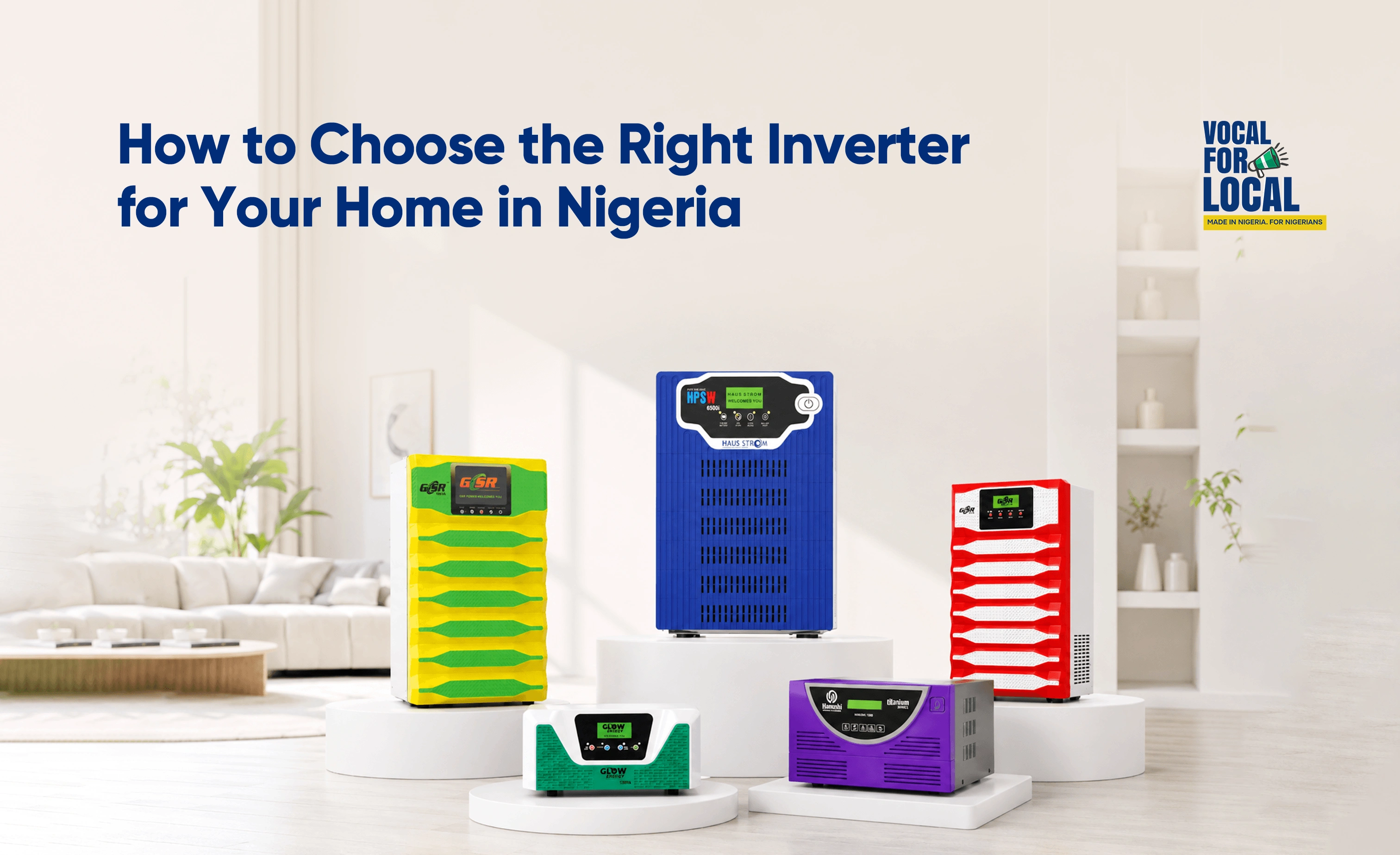
The inverter must support the combined load and the short starting demand of connected equipment without being continuously operated at its limit. Ask whether the proposed unit is a pure sine wave, hybrid solar or another approved configuration, and confirm that its output and charging capacity suit the application.
Where solar panels will be included, the installer should verify the permitted solar input voltage and current, charge-controller limits and the approved panel arrangement. Review Hausstrom inverter options at https://www.hausstrom.com/inverter-systems.html
3. Select the Battery Around the Application
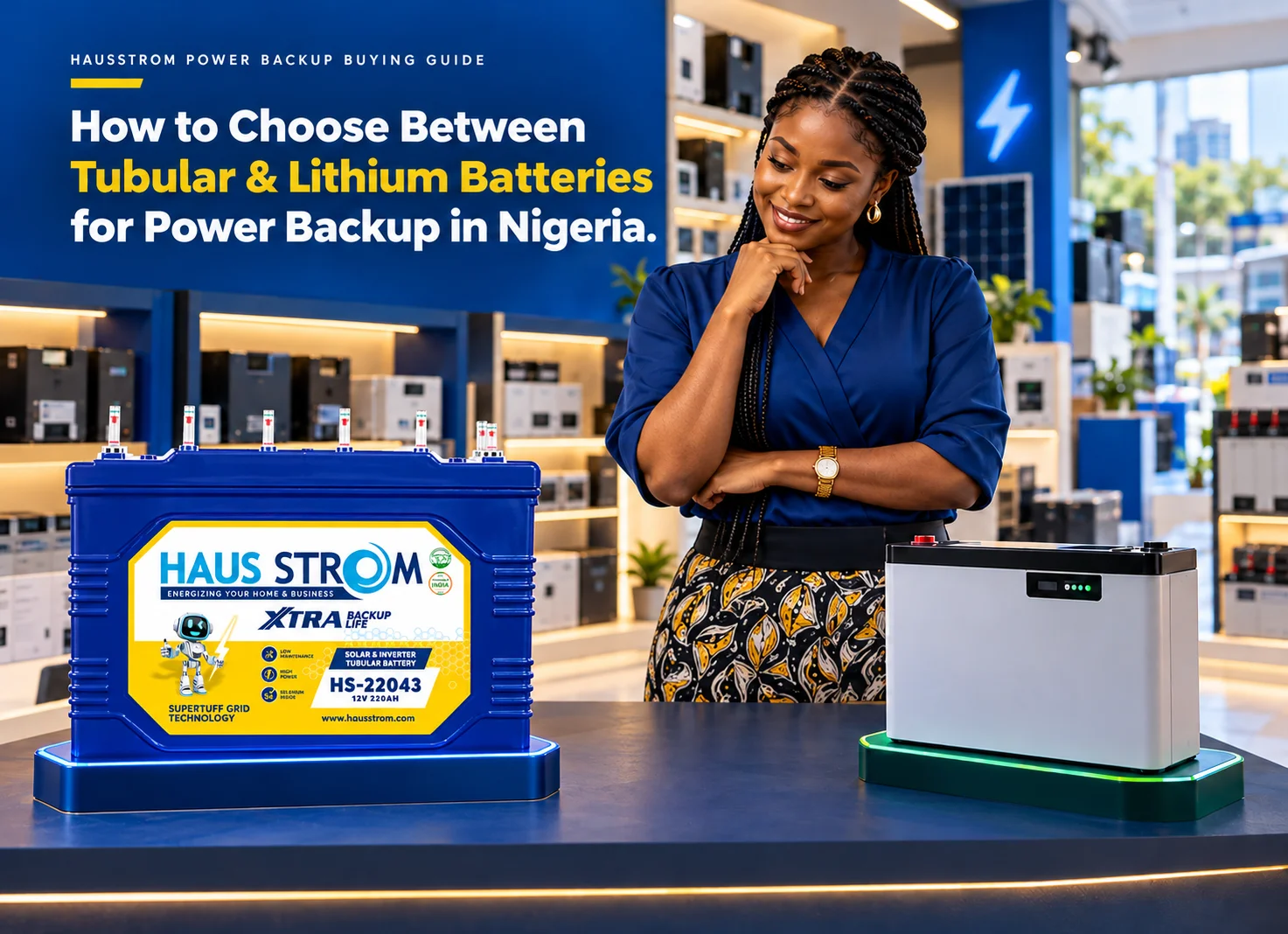
Tubular and lithium batteries serve different needs. A tubular battery may suit customers who value established technology, widespread service familiarity and tolerance for Nigeria’s irregular charging conditions. An approved lithium system may suit customers who value compact size, deeper usable capacity and integrated monitoring. Neither option is automatically best for every user.
Compare the battery’s voltage, usable energy, expected cycling pattern, charging requirements, installation conditions, maintenance needs and warranty. For tubular battery information, visit https://www.hausstrom.com/tubular-batteries.html
4. Confirm Inverter and Battery Compatibility
The inverter and battery must operate at the same system voltage and within approved charging and discharge limits. Lithium batteries may also require compatible communication protocols and cables. Tubular batteries require the correct charging profile and properly configured battery-bank arrangement.
Ask for written, model-specific confirmation. A general statement that an inverter “works with lithium” or that any battery can be connected is not enough.
5. Include the Correct Protection and Isolation
A complete quotation should address suitable AC and DC isolation, overcurrent protection, surge protection, cable sizes, earthing, distribution and changeover arrangements. Ratings must match the actual voltage, current and fault conditions of the installation.
Do not remove protection devices simply to reduce the price. Improvised connectors, exposed terminals, undersized cables and poorly selected breakers can create heat, faults and fire risk. Explore Hausstrom power distribution solutions at https://www.hausstrom.com/power-distribution.html while leaving final product selection to the approved site design.
6. Inspect the Installation Location
Equipment should be installed in a stable, dry and accessible location protected from water, direct sunlight, excessive heat, dust, impact and unauthorised access. Product instructions for clearance, ventilation, temperature and mounting must be followed.
Tubular batteries need appropriate ventilation and maintenance access. Lithium equipment should not block an escape route or be exposed to conditions outside the manufacturer’s limits. Larger systems should have a clearly labelled equipment layout and an emergency isolation procedure.
7. Ask for a Realistic Runtime Estimate
Runtime depends on usable battery energy, the actual connected load, inverter efficiency, battery condition, temperature and operating limits. It changes whenever appliances are added, removed or used differently.
Ask the seller to state the load and assumptions behind every runtime estimate. Treat a promise such as “eight hours” with caution if it does not specify what will be powered.
8. Verify the Installer and Commissioning Process
A competent installer should inspect the site, size the cables and protection, configure the inverter and charging settings, test the system and explain safe operation. The installation should not be treated as complete merely because the inverter turns on.
At handover, request a demonstration of startup, shutdown, alarms, isolation and basic fault response. Keep the approved settings and do not change them without qualified guidance.
9. Check Warranty, Documentation and After Sales Support
Before paying, confirm the exact product models, warranty duration, exclusions, authorised support route and who is responsible for installation-related faults. Keep the invoice, serial numbers, manuals, configuration record and installer details.
Buy through an authorised channel and confirm that replacement parts, technical support and escalation contacts are available. A low initial price can become expensive if the product cannot be verified or supported.
Warning Signs to Avoid
- A quotation based only on inverter size or battery capacity.
- A fixed runtime promise with no stated load.
- No written confirmation of inverter and battery compatibility.
- Protection devices described as optional extras that can simply be removed.
- An installer who does not inspect the load, wiring or installation location.
- Products with missing model numbers, serial numbers, manuals or warranty terms.
- Pressure to mix batteries of different types, ages, capacities or conditions without manufacturer approval.
Safe Power Backup Buying Checklist
- Essential loads and starting demands have been listed
- Inverter capacity and type match the intended application
- Battery type, voltage and usable energy have been reviewed
- Inverter and battery compatibility is confirmed in writing
- Protection, isolation, cabling, earthing and changeover are specified
- Installation location meets the product requirements
- Runtime estimate states the connected load and assumptions
- Installer competence and commissioning responsibilities are clear
- Warranty, serial numbers, manuals and support contacts will be provided
Frequently Asked Questions
How do I know the inverter size I need?
Calculate the total running load, consider the starting demand of appliances with motors or compressors and allow a sensible operating margin. Use a load calculator for the first estimate, then confirm the result with a competent installer.
Is lithium always better than a tubular battery?
No. The right choice depends on the application, budget, charging pattern, installation environment, maintenance expectations and equipment compatibility. Compare the complete system rather than battery chemistry alone.
Can I add more batteries later?
Only if the inverter, battery design and manufacturer permit expansion. Battery type, model, age, capacity, wiring and state of charge can matter. Plan likely future needs before buying.
Can I install the system myself?
Power backup systems involve high current, hazardous voltages and site-specific protection. Installation, expansion and troubleshooting should be handled by competent personnel following the product instructions and applicable requirements.
What should I do if the system becomes unusually hot or repeatedly reports a fault?
Stop using the affected equipment where it is safe to do so, keep people away from it and contact qualified support. Do not open a battery enclosure, bypass protection or repeatedly reset a fault without identifying the cause.
Choose the Complete System, Not Just the Biggest Number
A safe power backup system is the result of several correct decisions working together: a realistic load assessment, suitable inverter capacity, the right battery technology, confirmed compatibility, proper protection, competent installation and documented support.
Before you buy, start with the appliances you truly need during an outage and insist on a clear, itemised proposal. For product information and planning support, visit https://www.hausstrom.com/inverter-systems.html or speak with an authorised Hausstrom dealer about your application.
Trusted Quality. Promised Delivery. Guaranteed Support.