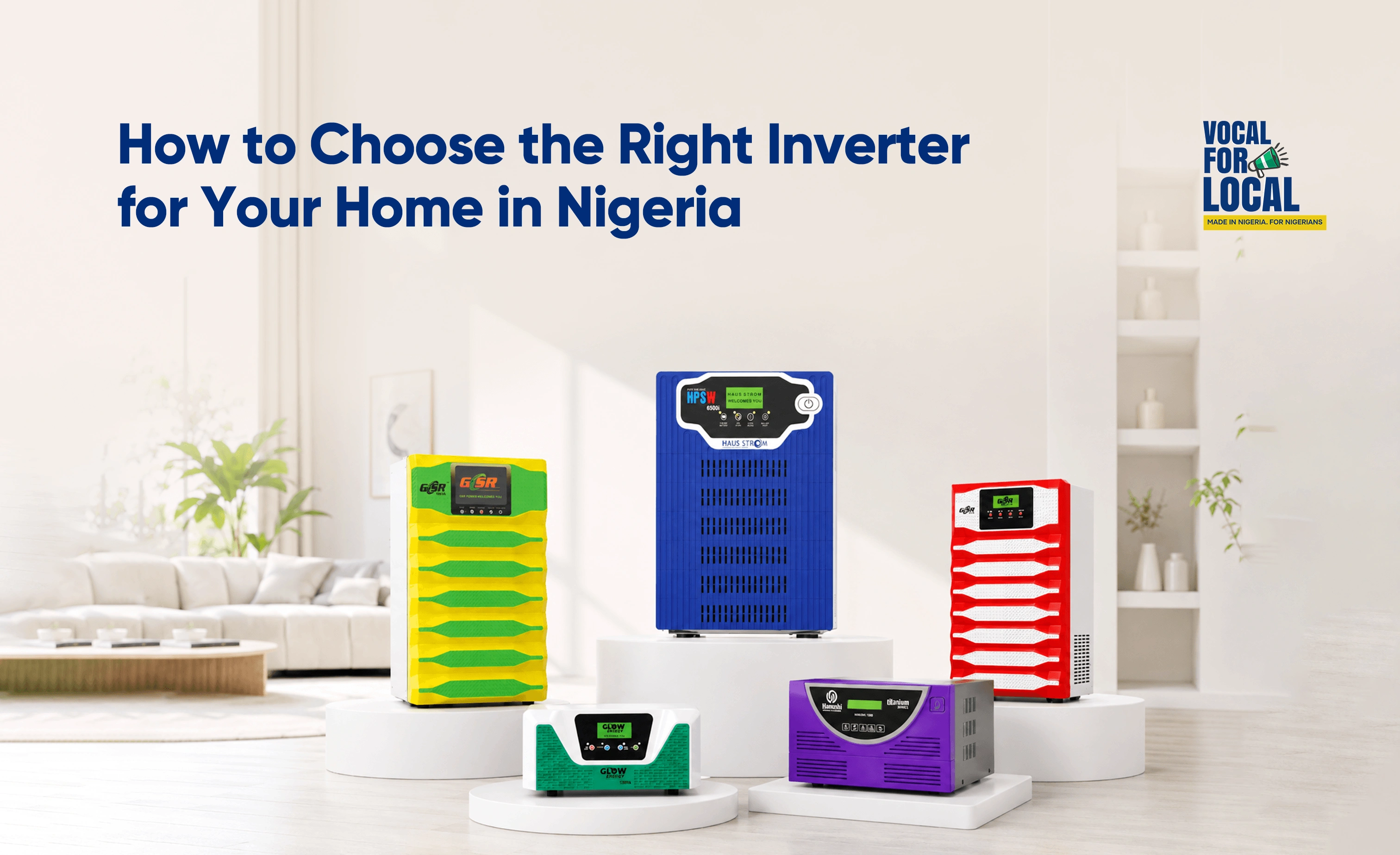
Choosing an inverter by capacity alone can be an expensive mistake.
A large inverter does not automatically provide longer runtime. A high-capacity battery does not correct an overloaded or poorly designed installation. Even two similar homes can require different systems because their appliances, usage patterns and electricity supply are different.
Nigeria’s electricity regulators are increasingly emphasising feeder-level supply information and service performance. This reinforces a practical point: good power-backup planning must reflect the customer’s actual circumstances—not a general assumption about the whole city.
This guide explains how Nigerian households and businesses can identify their essential loads, estimate their energy needs and have a more productive conversation with an authorised Hausstrom dealer or qualified installer.
1. Decide What Must Remain Powered
Begin with essential appliances rather than everything in the building.
For a household, the essential list might include selected lights, fans, television, an internet router, a laptop and—where properly assessed—a refrigerator.
For a small business, it could include POS terminals, computers, internet equipment, security systems, selected lights and critical refrigeration or medical equipment.
Heavy heating and motor-driven appliances may require much more power than lighting and electronics. Electric cookers, kettles, pressing irons, water heaters, pumps and air conditioners should not be added casually. The objective is not to place every appliance on the inverter. It is to protect what matters during an outage.
2. Find Each Appliance’s Power Rating
Check the appliance label, manual or manufacturer’s specification for its wattage. Record the appliance name, quantity and rated power in watts.
Multiply the wattage by the number of units. If four lamps are rated at 10 watts each, their combined connected load is 40 watts. Repeat the calculation for every intended appliance and add the figures together. You can also use the Hausstrom Inverter Load Calculator to organise your appliances and estimate the connected load before speaking with a dealer or installer.
Do not rely on a generic internet table when the appliance’s own rating is available. Two products that perform the same function may consume different amounts of energy.
3. Distinguish Running Power From Starting Demand
Some appliances briefly require more power when their motors start. A refrigerator, freezer, pump or certain air-conditioning units may therefore place a higher short-duration demand on an inverter than their normal running rating suggests.
A system may appear adequate when only running watts are considered, yet shut down when a motor starts. Ask a qualified installer to account for starting demand and confirm that the selected inverter is suitable for every motor-driven appliance connected to it.
4. Estimate How Long Each Appliance Will Be Used
Power tells you how much electricity an appliance requires at a given moment. Energy use depends on both power and time.
A television used for two hours does not consume the same energy as the same television used for eight hours. Similarly, three fans running throughout the night may influence required battery capacity more than a short period of television use.
Prepare a realistic schedule for lights, fans, television, router, computers and refrigeration. Designing around an artificially low usage estimate will produce disappointing runtime.
5. Understand That Inverter Size and Battery Capacity Do Different Jobs
The inverter system must handle the connected electrical load and any applicable starting demand. The battery bank stores the energy used during the outage.
Installing a larger inverter without adequate battery capacity does not guarantee longer runtime. Adding batteries without confirming inverter, charger, cable and system compatibility can also create problems. The inverter, batteries, charging arrangement, protection devices and connected circuits should be treated as one coordinated system.
6. Consider Your Actual Electricity-Supply Pattern
Ask how many hours of electricity you typically receive; whether outages are short and frequent or long and continuous; whether supply remains available long enough to recharge the batteries; whether solar charging is required; and which loads operate while batteries recharge.
These questions affect both sizing and battery recovery. Customers should also distinguish between their DisCo, service category and metering status instead of assuming one national electricity price.
7. Include Electrical Distribution and Protection
A power backup system should not be considered separately from the building’s electrical distribution.
A proper review may cover dedicated essential-load circuits, suitable protective devices, correct cable sizing, earthing, changeover arrangements, isolation, surge protection where required, and safe ventilation and battery placement.
Electrical work should be completed by competent personnel. Incorrect cabling or protection can create equipment, fire and personal-safety risks.
Practical Nigerian Examples
A small flat seeking lights, fans, television and internet access may require a very different solution from a duplex that also expects to power refrigeration, pumping and air conditioning.
Likewise, a pharmacy protecting POS, lighting and selected refrigeration has a different risk profile from a fashion store protecting only lighting, internet and payment systems.
This is why quotations should be based on an appliance list, operating hours and supply pattern. “What can this inverter carry?” is only the beginning. The better question is: “What must it carry, for how long, and under what charging conditions?”
Important Technical Cautions
Battery runtime is an estimate, not a universal product constant. It can be affected by:
- Actual connected load
- Battery capacity and condition
- Depth of discharge
- System losses
- Charging quality
- Battery age and temperature
- Installation quality
- User behaviour
Follow the battery manufacturer’s maintenance instructions. For tubular batteries, use only the specified top-up fluid and procedure where maintenance is required. Never improvise battery maintenance or modify electrical connections without qualified guidance.
Common Mistakes to Avoid
- Choosing an inverter only because it has the highest kVA rating
- Connecting every appliance in the building
- Ignoring motor-starting demand
- Expecting a larger inverter to create longer battery runtime
- Using approximate wattages when product labels are available
- Forgetting to plan how batteries will recharge
- Accepting fixed-runtime promises without a load calculation
- Using undersized cables or unsuitable protection
- Allowing unqualified persons to install or modify the system
- Buying products without confirming authenticity, warranty terms and support responsibility
A Simple Power-Backup Sizing Checklist
- Appliances that must remain powered
- Quantity and wattage of each appliance
- Motor-driven or high-starting-demand appliances
- Expected operating hours during an outage
- Typical outage duration
- Available charging time
- Whether solar charging is required
- Essential and non-essential circuits
- Installation and protection requirements
- Product authenticity and applicable warranty terms
- Who will install and support the system
Frequently Asked Questions
Does a bigger inverter always give longer runtime?
No. Inverter capacity determines the load the inverter is designed to handle. Runtime depends heavily on battery capacity, battery condition, connected load and system efficiency.
Can I connect my pressing iron or electric kettle?
These are generally high-power heating appliances. Whether they can be connected safely depends on the complete system design, but placing them on a household power-backup system may greatly increase demand. Obtain technical guidance first.
How can I make my battery last longer during an outage?
Reduce unnecessary loads, use efficient appliances, switch off unused equipment and follow the correct charging and maintenance procedures. Any expected runtime should be calculated for the specific system.
Should I size the system myself?
You can prepare an appliance and usage list, but final selection and installation should be reviewed by a qualified professional—particularly where motors, multiple batteries, solar charging or distribution-board work are involved.
Why does my inverter shut down when an appliance starts?
The appliance may have a starting demand greater than its normal running demand, the combined load may be too high, or another system issue may exist. A qualified technician should diagnose it.
How often should my power needs be reviewed?
Review them when adding major appliances, expanding a business, changing operating hours, altering the battery bank or experiencing repeated overloads or inadequate runtime.
Choose Clarity Before Capacity
The best power-backup decision begins before the product is purchased.
Identify your essential appliances. Check their actual ratings. Estimate their operating time. Understand your supply pattern. Then ask a qualified installer to coordinate the inverter, batteries, charging system, electrical distribution and protection.
Hausstrom customers can consult authorised dealers and qualified technical professionals for product selection and application guidance. Review the Hausstrom installation guide and explore available services and technical support. The goal should be a properly matched system—not simply the biggest inverter or battery available.
Trusted Quality. Promised Delivery. Guaranteed Support.
Research References
Trusted Quality. Promised Delivery. Guaranteed Support.
Talk to a Hausstrom dealer or qualified technical professional to get a properly matched inverter and battery system for your power needs and local supply conditions.